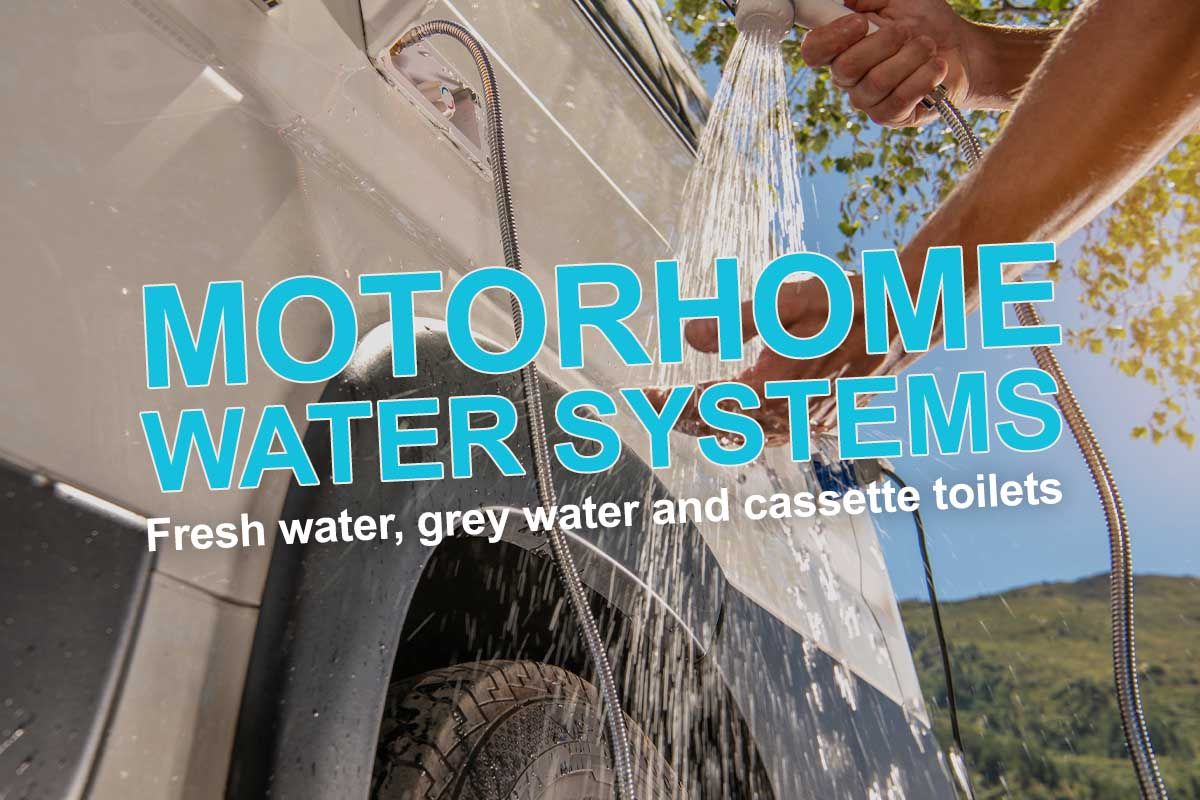
Water is one of those things people often assume will be complicated in a motorhome.
You’ve got tanks, pumps, waste systems, and a toilet that works differently from what you’re used to at home. It’s easy to imagine it being awkward or difficult to manage.
In reality, it’s one of the simplest systems to understand.
Once you know where the water comes from, where it goes, and how often you need to deal with it, everything starts to feel very straightforward. For most people, it quickly becomes part of the routine rather than something they think about.
The basics of how it works
Every motorhome has two main water systems.
The first is the fresh water system, which stores clean water for drinking, washing and showering.
The second is the waste water system, often called grey water, which collects used water from sinks and showers.
On top of that, there’s a separate system for the toilet, which is usually a cassette-based setup.
Once you understand those three parts, the whole system makes sense.
Fresh water: where it comes from
Fresh water is stored in a tank inside the motorhome.
You fill this tank from outside the vehicle, usually using a hose or a portable container. Once it’s filled, a small electric pump moves the water through the system.
When you turn on a tap or the shower, water flows just like it would at home. There’s no need to be connected to anything. As long as the tank has water and the leisure battery has charge, it all works as expected.
One of the most common questions is whether you can drink the water.
The system itself is designed for it, but many people choose to use bottled water or a filter for drinking. That tends to come down to personal preference rather than any limitation of the motorhome.
The more important thing to look at when choosing a motorhome is the size of the tank. A larger tank means you can stay in one place longer before needing to refill.
Grey water: where it goes
Once you’ve used water from the sink or shower, it doesn’t disappear. It collects in a separate tank known as the grey water tank.
This is usually located underneath the motorhome. It stores all the used water until you’re ready to empty it.
Emptying grey water is very simple. You position the motorhome over a designated drain point, open a valve, and let the water flow out. It’s quick, clean, and becomes a normal part of your routine.
If you’re using the motorhome regularly, especially for showering, you’ll likely empty the grey water tank every couple of days.
The cassette toilet: how it works
The toilet is often the part people feel most unsure about, but it’s much easier than it sounds.
Most motorhomes use a cassette toilet, which stores waste in a removable tank. This tank sits beneath the toilet and can be accessed from an external hatch on the side of the motorhome.
When it’s full, you slide the cassette out, take it to a designated disposal point, empty it, rinse it, and put it back.
It’s a quick process and far less complicated than people expect. Once you’ve done it once or twice, it becomes completely routine.
How often you need to empty it depends on how many people are using it, but for a couple, it typically lasts a couple of days.
Showering in a motorhome
Yes, you can shower in a motorhome, and for many people, it’s better than expected.
You have hot water, decent pressure, and a fully enclosed space in most layouts. The main difference is that you become a bit more aware of how much water you’re using.
Long showers will use up the fresh water tank and fill the grey water tank more quickly. Because of that, many people adopt shorter showers or mix onboard use with campsite facilities when available.
It’s not a limitation as such, just a different way of thinking about water usage.
Using water in colder weather
If you plan to use a motorhome outside of summer, it’s worth thinking about how the water system is protected in colder conditions.
Some motorhomes are designed for year-round use and have insulated tanks, protected pipework, or heating systems that prevent freezing.
Others are better suited to milder weather.
If winter touring is something you’re considering, it’s a good idea to check how the water system is set up and whether it’s designed to handle lower temperatures.
What to ask before you buy
You don’t need to know every detail, but a few simple questions can help you understand how practical the system will be.
It’s worth asking how large the fresh and waste tanks are, where the waste valve is located, and how easy it is to access and empty the toilet cassette.
If you’re planning colder trips, you can also ask whether the system is suitable for winter use and how it’s protected.
These small details can make a big difference to how easy the motorhome is to live with.
How it fits into everyday use
Once you start using a motorhome, the water system quickly becomes second nature.
You fill the fresh tank when needed, empty the grey water regularly, and take care of the toilet cassette every few days. It sounds like a lot when written down, but in practice it’s just part of the routine.
Most people find that after a couple of trips, they stop thinking about it altogether.
Final thoughts
Motorhome water systems sound more complicated than they really are.
At their core, they’re simple, reliable, and designed to make the motorhome usable wherever you are. Once you understand the basics, they stop feeling like a concern and start feeling like one of the things that makes motorhome travel so flexible.
And like most aspects of motorhome ownership, it’s something that becomes easier the more you use it.