Electricity is one of the areas that puts people off motorhomes the most at the beginning.
It sounds complicated, there’s a lot of conflicting advice online, and it’s not always obvious what will and won’t work when you’re not plugged into a campsite.
The good news is that once you understand the basics, it’s actually very straightforward. You don’t need to be technical or remember lots of details. You just need to understand how the system is set up and what it’s designed to do.
At its simplest, a motorhome has two electrical systems. One is designed to work anywhere, and the other works when you’re connected to mains power. Once that clicks, everything else starts to make sense.
The two types of electricity in a motorhome
Every motorhome uses a combination of 12-volt power and 230-volt mains power.
The 12-volt system is powered by the leisure battery. This is the system that keeps the motorhome running when you’re not plugged into anything. It’s what makes off-grid travel possible and allows you to use the motorhome in a flexible way.
The 230-volt system is the same type of electricity you have at home. This only works when you’re connected to a mains hook-up, unless the motorhome has additional equipment fitted.
Understanding the difference between these two systems is the key to everything else.
What the leisure battery actually does
The leisure battery is what powers the living side of the motorhome.
It runs things like the lights, the water pump, the control panel, USB sockets, and often the toilet flush. In many motorhomes, it will also power the fridge when you’re driving.
This system is designed to be efficient and reliable, which means it can run for a reasonable amount of time without needing constant charging.
As long as the battery has charge, you can still use your lights, access water, and use basic functions whether you’re on a campsite or parked somewhere more remote.
The battery itself is charged in a few different ways. It charges when you drive, when you plug into mains hook-up, and in some cases through solar panels if they are fitted.
What works on mains electricity
The 230-volt system powers the things you would normally plug into a wall at home.
This includes standard plug sockets, kettles, hairdryers, microwaves, and other higher-power appliances. These only work when the motorhome is connected to a campsite hook-up, unless there is an inverter installed.
This is where many beginners get caught out. It’s very easy to assume that everything will work all the time, but in reality, high-power appliances need a mains connection.
So if you’re off-grid, you won’t typically be using a standard electric kettle or running multiple plug-in devices in the same way you would at home.
What “hook-up” actually means
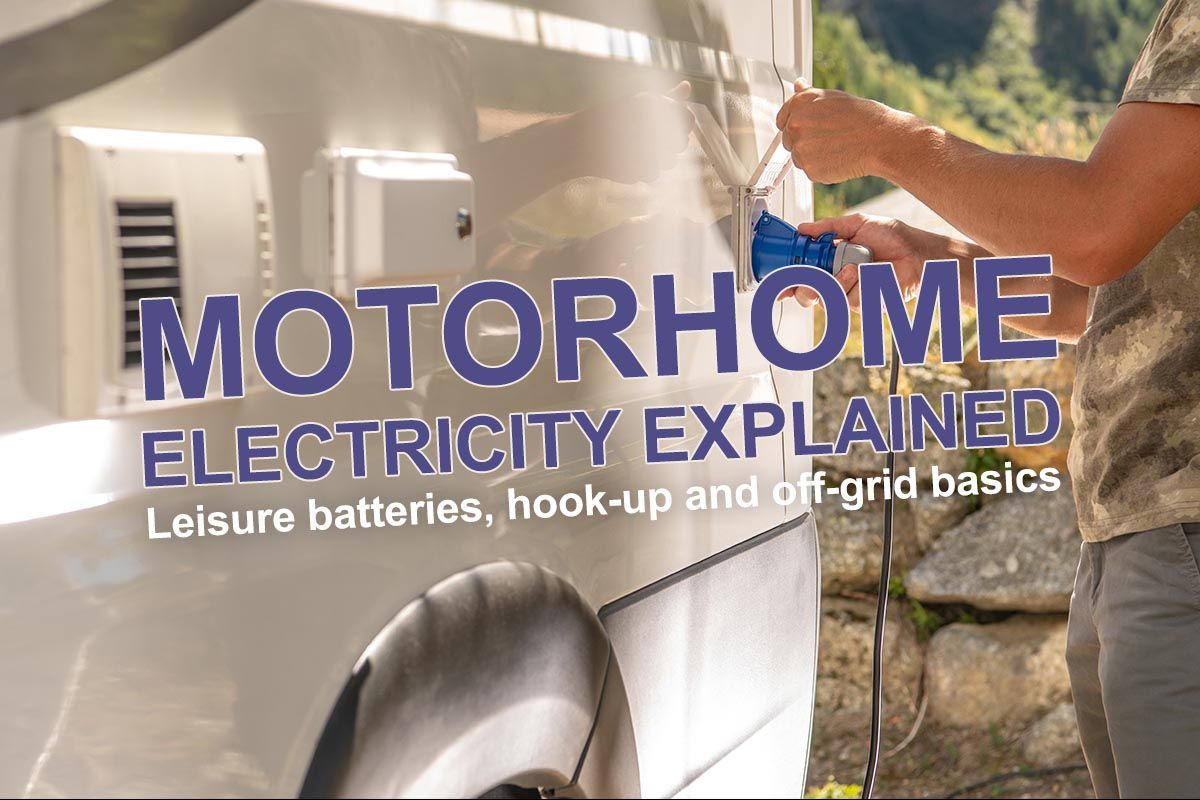
When someone says a motorhome is “on hook-up”, they mean it is connected to mains electricity at a campsite.
You plug the motorhome into an external power point using a cable, and this supplies 230-volt power to the vehicle. At the same time, it charges the leisure battery in the background.
When you’re on hook-up, the motorhome behaves much more like a small home. You can use plug sockets, run appliances, and not worry about battery levels in the same way.
Off hook-up, the motorhome switches back to relying on the battery and gas systems instead.
What happens when you’re off-grid
Off-grid simply means you are not connected to mains electricity.
This might sound restrictive at first, but motorhomes are designed to work this way. The 12-volt system continues to run your lights, water and essential functions, while gas is used for things like cooking, heating and often the fridge.
Most people naturally adjust without really thinking about it. When electricity is available, you use it. When it isn’t, you rely on the systems designed for independence.
This balance is what gives motorhomes their flexibility.
What an inverter does
An inverter is an additional piece of equipment that allows you to use some mains-style appliances without being plugged into hook-up.
It works by converting 12-volt battery power into 230-volt power, which means you can run things like laptop chargers or small appliances from the battery.
However, there are limits. High-power items like kettles and hairdryers use a lot of energy, so running them from a battery requires a more advanced setup with larger batteries and a powerful inverter.
That’s why an inverter should be seen as a useful extra rather than a standard feature. If it matters to you, it’s worth asking what type is fitted and what it can realistically power.
What to ask before you buy
You don’t need to understand every technical detail, but there are a few simple questions that can help you feel much more confident.
It’s worth asking how many leisure batteries the motorhome has, whether solar panels are fitted, and if there is an inverter installed. You can also ask how the battery charges and how long it typically lasts in normal use.
These questions give you a much clearer picture of how the motorhome will perform in real-world conditions, especially if you’re planning to spend time off-grid.
The simple way to think about it
The easiest way to understand motorhome electricity is to think of it in two modes.
When you’re on a campsite with hook-up, you use electricity much like you would at home. Appliances work, sockets are live, and the battery charges in the background.
When you’re off-grid, the motorhome switches to a more self-sufficient setup. Lights, water and essential systems still work through the battery, while gas takes care of heating and cooking.
Once you’ve experienced both a couple of times, it quickly becomes second nature.
Final thoughts
Motorhome electricity sounds more complicated than it really is.
At its core, it’s a simple system designed to give you flexibility. You can plug in when it’s available, and rely on built-in systems when it’s not.
You don’t need to become an expert. You just need to understand what each part does and how it fits into everyday use.
And once you do, it stops feeling like a limitation and starts feeling like one of the things that makes motorhome travel so adaptable.